Past Projects
UCR Natural Reserve System Summer Internship
2025 Projects
Look through the great projects we have listed below! If you are applying for the internship, we will ask you to rank them on the application (APPLY HERE button above).
A. Biodiversity Survey of Parasitic Hymenoptera at UC Reserves
Mentors:Dr. John Heraty (UCR)

Insects are the most diverse group of eukaryotic organisms. Our UC Reserves cover a wide range of ecosystems across the California Floristic Province biodiversity hotspot. However, the insect fauna of these reserves is still severely understudied. This is particularly true for insect groups where individuals are small and where many species are still unknown to science. We are looking for interns that would help to sample and curate Hymenoptera (specifically parasitoid wasps). This project will use a variety of collecting techniques (Malaise traps, yellow pan traps, sweeping vegetation, etc.) at multiple reserves (Granite Mountains, James Reserve, Emerson Oaks, Motte Rimrock) to survey these insects. Specimens will be sorted to morphospecies and imaged at UCR to become part of a large barcoding initiative for insects across all of California. A goal of this project is to get an initial assessment of species richness at each of the four sites. Interns will gain experience in the recognition of insect families, collecting techniques, curation of insect material, databasing and the basics of molecular sequencing.
B. Bumblebees of UC Nature

Mentor: Dr. Hollis Woodard (UCR)
Bumble bees are important pollinators in many natural and agricultural systems, but many species within the group are declining and face potential extinction. Improving our understanding of where they are found and patterns of genetic diversity within species are both critical to conserving bumble bees. This project will examine how bumble bees (both individuals and populations) are shaped by their environments, focusing on understanding the genetics of disparate populations in the mountainous areas of Southern California.

This internship will support the new California Bumble Bee Atlas Project (www.cabumblebeeatlas.org), which is a partnership between the Xerces Society for Invertebrate Conservation and the California Department of Fish and Wildlife. The intern will help survey bumble bees, collect tissue samples and data from the field, and assist with ongoing laboratory projects in the Woodard lab. The intern will receive training in field research methods and safety, bee identification, conservation biology, genetics/genomics, and experimental biology.
C. Carbon and Nutrient Cycling in Southern California Watersheds

Mentor: Dr. Tamara Harms (UCR)
Solutes exported from land to water reflect ecosystem processes that occurred within the watershed. For example, concentrations of biologically important elements including carbon, nitrogen, and phosphorus in streams might respond to changes in ecological processes resulting from fire, drought, and storms. In this project, an intern would measure relationships between solute concentrations and streamflow in streams at UC Natural Reserve sites in Southern California. These relationships provide insight into how materials are stored and transported in watersheds. Field work would include measuring stream discharge and using automated samplers to collect water. Water samples would be analyzed in the lab for solute concentrations. Finally, the intern would gain experience with data visualization and analysis.
D. Carnivore Catalog: Documenting Riverside's Wild and Urban Predators

Mentors: Dr. Ellie Armstrong (UCR) and Dr. Marko Spasojevic (UCR)
The presence and abundance of carnivores are useful indicators of an ecosystem's overall health and diversity. However, their elusive nature makes them difficult to study in the wild. In this project, students will use a combination of non-invasive methods (camera trapping and eDNA/fecal DNA) paired with historical record reviews to help us reconstruct the history and current status of Riverside's carnivore populations. The intern will receive training on working with camera trap images, genetic lab and analyses techniques, as well as experience working with museum collections and records. Results will help us create a baseline for monitoring carnivore populations and contribute to our understanding of Riverside's biodiversity.
E. Ecology of Desert Tortoises in the Southern Coachella Valley
Mentors: Dr. Jeff Lovich (USGS), Dr. Kristy Cummings (USGS), Dr. Bill Hoese (CSU Fullerton), Dr. Chris Tracy (UCR Deep Canyon Reserve)
Desert tortoises (Gopherus agassizii) are an iconic species that lives throughout the Mojave and Colorado Deserts. The burrows of this federally threatened species provide shelter for a wide range of species, including birds, mammals, and other reptiles. The population of desert tortoises south of the Coachella Valley is isolated from the rest of the species range and occurs both at the edge of the species range and lower elevations than are typical for the species. However, no published studies are available for this population of tortoises. Because low desert elevations tend to be relatively hotter and drier, tortoises in this area may provide insights into how tortoises elsewhere will have to cope with climate change.
This ongoing project will involve monitoring activity at tortoise burrows in the Boyd Deep Canyon Reserve (near Palm Desert) and may involve a number of techniques and collaborators. Camera traps have been set at several known burrows to monitor tortoise activity and burrow use by other species, and radio transmitters have been attached to some tortoises to monitor their movements and other behaviors. The intern will have opportunities to develop wildlife and data management skills that may open doors for future jobs in conservation biology. The project will involve maintaining camera traps, viewing videos from the traps and extracting data from them, other data analysis, radio tracking of tortoises, finding new burrows, and observing tortoise behaviors in the wild. The project will involve several trips to the Deep Canyon Reserve that might include overnight stays. It will require hiking in rough desert terrain during the summer, when temperatures will often be over 100°F. The intern will be working primarily at the Deep Canyon Reserve with researchers from the U.S. Geological Survey, UCR, and Cal. State Fullerton to help understand tortoise behaviors in this understudied population, as well as use of tortoise burrows by tortoises and other species.


F. Environmental Change and the Consequences for the Diversity and Functioning of Forest Plant Communities
Mentor: Dr. Chris Catano (UCR)

Summer undergraduate research at the intersection of plant biodiversity science, community ecology, and global change biology. Working within a long-term forest dynamics plot at James San Jacinto Mountains Reserve, we will explore questions about the distribution and functioning of understory plant communities. The forest understory is a critical, but often overlooked source of biodiversity and ecosystem functioning in forests. Students will contribute to creating a new long-term monitoring project to understand how the forest herbaceous layer (grasses, sedges, forbs, etc.) respond to change in soil resources, overstory tree growth and mortality, and longer-term global changes such as drought.
Specific student projects will be further refined and developed through initial meetings with PI Chris Catano, and will generally include plant identification, surveys of species’ relative abundances, and measurements of individual plant functional traits. No prior experience is necessary; this will be both a fun and authentic research opportunity for students looking to gain experience in plant community ecology research and develop field and lab techniques/skills. Additional opportunities outside the James Reserve may include contributing to a globally distributed experiment (at the UCR Botanic Gardens) to understand how disturbance and elemental resources alter grassland community assembly.
G. Forest Dynamics

Mentor: Dr. Marko Spasojevic (UCR)
Forests play key roles in biodiversity maintenance and climate regulation. Globally, forests support over half of all described species and provide many valuable ecosystem functions and services such as timber, clear air, clean water, and carbon storage. However, forests worldwide are being threatened by habitat loss, drought, and changing fire regimes, which have all resulted in losses to biodiversity and alterations to key ecosystem functions and services. Understanding and predicting how forests will respond to ongoing and pervasive changes to the environment is critical for biodiversity conservation and for the management and maintenance of ecosystem services. To address this, the Spasojevic Ecology lab at UC-Riverside has established a 4ha Forest Dynamics Plot (FDP) adjacent to the James Reserve. Briefly, within the FDP every free-standing woody stem (live or dead) greater than 1cm in diameter has been identified to species, mapped, measured, and tagged for long term monitoring. In establishing this plot, we have observed that many of the Conifers are dead or dying and that there are few Conifers recruiting into this forest. On the other hand, very few Oaks have died and there are many Oaks recruiting into the forest. These patterns suggest a potential shift in the composition of the forest from a mixed Oak-Conifer Forest to a more Oak dominated system. This change in the composition of the forest can have important ramifications for carbon storage, as Oaks are slower growing than Pines, as well as implications for the rest of the plants and animals that depend on these species. We are seeking an intern that is interested in plant ecology and climate change who is seeking to gain field experience (spending most of their research time in the field).

H. Hybrid Penstemon
Mentor: Dr. Kate Ostevik (UCR)

Hybrids between species are an overlooked but important source of biodiversity. In fact, sometimes hybrids become independent species that are distinct from both of their parents! In this project, the intern will work with the Ostevik lab to explore differences between the hybrid species, Cleveland’s Beardtongue (Penstemon clevelandii), and its parents, scarlet and showy Beardtongue (P. centranthifolius and P. spectabilis). These beautiful plant species are native to several UCR Reserves where much of this project will take place. The project will involve a mix of fieldwork, greenhouse work, and data analysis.

I. Phylogenetic Diversity of Plant Bugs at UC Reserves
Mentor: Dr. Christiane Weirauch (UCR)

Plant bugs are a megadiverse insect family. They are particularly diverse in Mediterranean scrubs and woodlands, a biome that is acutely threatened by habitat loss. Recent federal funding has generated a vast body of biodiversity data for plant bugs that can now be used to test hypotheses on co-diversification with plants, biogeographic history, and phylogenetic diversity in Mediterranean biomes such as the California Floristic Province (CA-FP). The ~700 named species of plant bugs in the CA-FP offer a unique opportunity to test hypotheses on phylogenetic diversity and phylogenetic endemism derived from studies on plants and vertebrates. Determining centers of endemism to inform conservation decisions is a critical part of multi-species approaches to conservation. Field work for this project is conducted across the CA-FP, with emphasis on UC Reserves (incl. Lassen Field Station, Angelo Coast Range Reserve, Kenneth S. Norris Rancho Marino Reserve, and Sedgwick Reserve). Interns will gain skills in conducting fieldwork in several Reserves and will be able to curate, image, barcode, and identify collected samples to make them available for phylogenetic diversity studies.
J. Plant-Insect Interactions in UC Nature
Mentor: Dr. Erin Rankin (UCR)

Interested in plant-insect interactions? Join us out in the field to study herbivores and pollinators of mallows in California sagescrub! We will be documenting and photographing herbivory damage, as well as the floral visitors to damaged and undamaged plants. During flowering, we will count flowers, observe pollinator visitation in the presence and absence of herbivores and estimate pollination rates. After flowering, we will collect any new seed pods and assess any root sucker growth. We will be conducting complementary greenhouse experiments in addition to the field observations.

K. Understanding Drought Through Rainfall Manipulation Experiments

Mentor: Dr. Pete Homyak (UCR)
Nitrogen emissions from soils (N2, NOx, and N2O) are products/byproducts of biological processes and are often ignored in ecosystem nutrient budgets. However, soil N gas fluxes are an important pathway for ecosystem nutrient loss, particularly in regions with strong seasonality such as California, whose Mediterranean climate produces strong temporal gradients in soil moisture. Furthering understanding of the mechanisms that control soil N emissions is important for modeling N pollution at a global scale since semiarid ecosystems account for 1/3 of the land surface and 25% of global soil NO emissions.
Our lab is quantifying the significance of gaseous N pathways, by linking biological processes with periods of stress to soil microbes (drought), and by understanding how legacies of past precipitation affect N emissions and N cycling.
To understand mechanisms of gaseous N production, we integrate both C and N measurements with isotopic tools in both field and laboratory experiments.
Ecology of Stephen's Kangaroo Rat
Mentor: Dr. Loralee Larios
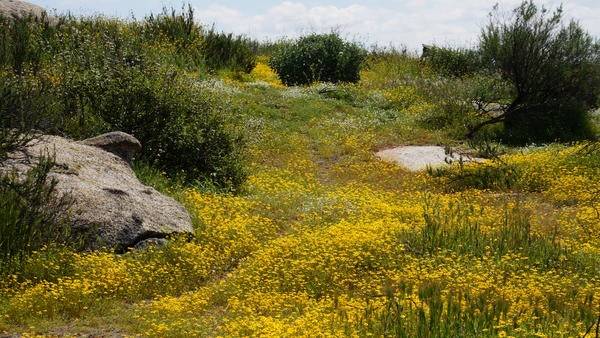
The Motte Rimrock Reserve is critical habitat for the threatened Stephens' Kangaroo Rat (SKR). This small rodent is an important component of the local grassland and coastal sage scrub habitat. It's foraging has strong impacts on plant community composition. For this project, the intern will work with the Larios lab in collaboration with the staff at the Motte Rimrock reserve to explore the ecology of this species. The project will contain a mix of data analysis and field work.
Biodiversity Survey of Heteroptera and Parasitic Hymenoptera at UC Reserves
Mentors: Dr. Christiane Weirauch and Dr. John Heraty
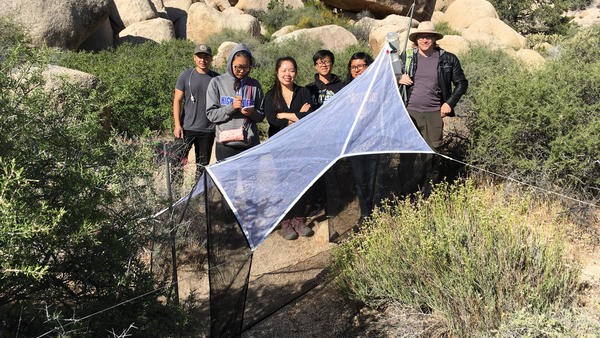
Insects are the most diverse group of eukaryotic organisms. Our UC Reserves cover a wide range of ecosystems across the California Floristic Province biodiversity hotspot. However, the insect fauna of these reserves is still severely understudied. This is particularly true for insect groups where individuals are small and where many species are still unknown to science. We are looking for interns that would help to sample and curate two very diverse groups, the Heteroptera (true bugs) and Hymenoptera (specifically parasitoid wasps). This project will use a variety of collecting techniques (Malaise traps, yellow pan traps, sweeping vegetation, etc.) at multiple reserves (Granite Mountains, James Reserve, Emerson Oaks, Motte Rimrock) to survey these insects. Specimens will be sorted to morphospecies and imaged at UCR to become part of a large barcoding initiative for insects across all of California. A goal of this project is to get an initial assessment of species richness at each of the four sites. Interns will gain experience in the recognition of insect families, collecting techniques, curation of insect material, databasing and the basics of molecular sequencing.
Effects of Climate Change on Diurnal and Nocturnal Insect Diversity and Pollination Interactions
Mentor: Dr. Nicole Rafferty
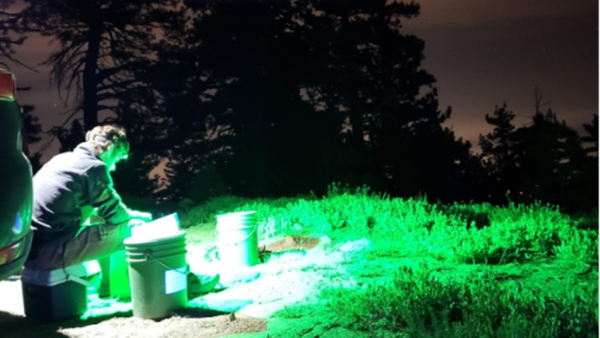
The Rafferty Lab—in the Evolution, Ecology, and Organismal Biology Department at UC Riverside—is seeking a UC NRS Intern to do research at the Boyd Deep Canyon Desert Research Center, where a current project in the lab examines the effects of climate change on diurnal and nocturnal insect diversity and pollination interactions. Field work would take place along a steep elevational gradient that begins near the main Boyd station in desert habitat, continues up through chaparral and pinyon-juniper woodland, and ends atop the Santa Rosa Mountains in conifer forest habitat. The intern would work closely with graduate students to assist with both field and lab work. Training will be provided in tasks ranging from collecting insects, recording plant-visitation, and surveying flowering phenology in the field, to pinning and identifying insects, organizing data, and performing analyses using R software in the lab. The independent research project can make full use of the previous two years of data from these field sites, in addition to any data the intern collects. Potential research project topics include those focused on plant and/or insect ecology (e.g., pollination), projects specific to desert, chaparral, and forest habitats, and elevational trends in insects and/or plants. Work can be divided between field and lab depending on the student’s preference. Field sites are no more than two hours drive from the UC Riverside campus, and transportation can be shared. Field trips often involve overnights in remote camping conditions, and hiking off-trail in uneven terrain.